Showing posts with label Horror. Show all posts

Book Publishing Secrets with Wes Verde #books #bookpublishing


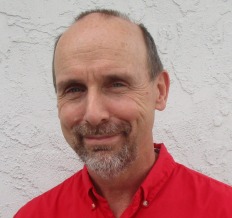
Wes Verde is an engineer by trade, a busybody by habit, and a lifelong Jersey boy.

A fan of nature, he spends as much time outside as possible.

His latest book is the horror/action novel, Luna’s Veil.

Author Links  

Website | X (Twitter) | Facebook | Instagram | YouTube

📙 Thank you for your time in answering our questions about getting published.  Let’s begin by having you explain to us why you decided to become an author and pen this book?

Wes: Thanks for having me and glad to be here. 


Honestly, I’ve been telling stories in one medium or another for as long as I can remember, but it wasn’t until about five or so years ago that I decided to go for public release. I had acquired an interest in history, especially about my home state, and I really wanted to share what I had learned. Incidentally, this is also the basis for my Words and Coffee podcast. New Jersey has its own cryptid – the Jersey Devil – and a series of attacks along the shore in 1916 that were attributed to a shark attack (or was it?) so a foray into the horror genre was overdue for me.

In the case of Luna’s Veil, my kids asked about eclipses and how they work. That took me down the rabbit hole of ancient accounts of eclipses being seen as harbingers of doom and thus came the concept of an ethereal being who could only influence Earth during certain phases of the moon. Then there’s the role of gangsters and secret societies in the 1920s and I had material aplenty.

📙 Is this your first book?

Wes: Luna’s Veil is lucky number 3. Before that was Jalopy and The Safe Game. I’ve made my literary home in historical fiction. As a personal challenge and help focus the narrative, I have two rules: 1) primary setting is New Jersey, and 2) set around 1920. As often as I can, I will try to incorporate research from the Words and Coffee podcast into the books in the form of side characters or little details to give the story just a little more depth. 


📙With this particular book, how did you publish – traditional, small press, Indie, etc. – and why did you choose this method?

Wes: Indie all the way. Amazon is a really outstanding resource for someone with an idea and drive, but no connections to major publishers. Most of my readers are through Kindle Unlimited.

📙Can you tell us a little about your publishing journey?  The pros and cons?

Wes:To continue from my previous answer, Amazon isn’t perfect. For those just starting out or without established readers, the indie route involves a lot of effort. Not insurmountable, but certainly daunting for those who are just beginning their literary journey. Fortunately, there are plenty of helpful guides and tutorials to help you figure it out.

📙What lessons do you feel you learned about your particular publishing journey and about the publishing industry as a whole?

Wes: It’s really easy to lose money on faux-influencers who promise to expand your reach. Botfarms exist and they give all the appearance of engagement, but none of the readership or sales. There is no substitute for putting in the work, growing readership, and vetting potential advertisers. If a deal seems too good to be true, it probably is.

📙Would you recommend this method of publishing to other authors?

Wes: Absolutely. Amazon KDP was made for the indie writer. Don’t be daunted by the level of effort; just eat the elephant one bite at a time.

📙What’s the best advice you can give to aspiring authors?

Wes: Write what you love, because you will read it 1,000 times….

Release Date: June 29, 2024

Publisher: Wes Verne

ASIN: B0D1LK45JH; 328 pages, eBook $1.99 

Amazon: https://www.amazon.com/dp/B0D1LK45JH

Book Publishing Secrets with Horror Author Patrick C. Greene

Book Title: The Crimson Calling
Genre: Horror fiction
Publisher: Hobbes End
Thank you for your time in answering our questions about getting published.  Let’s begin by having you explain to us why you decided to become an Patrick and pen this book?
Patrick: My father was an author and the skill of writing came naturally if not easily. I excelled in English classes –that is, when I “applied myself” as the teachers say. But I’ve always had an overactive imagination, often spending more time inside some elaborate inner world than in this so-called reality.
Is this your first book?
Patrick: It’s my second novel. PROGENY was my first, followed by a collection of shorties called DARK DESTINIES and a string of e-published short stories.
With this particular book, how did you publish – traditional, small press, Indie, etc. – and why did you choose this method?
Patrick: My publishers, Jairus Reddy and Hobbes End, worked absolute wonders with PROGENY so it was an easy decision to submit this one to them as well. From proofing to graphics to promoting, they knock it out of the park.
Can you tell us a little about your publishing journey?  The pros and cons?
Patrick: I started as a screenwriter because I was an actor for a while and entrenched in that world of film production. Frankly, the prospect of writing a full novel was daunting. I had many fears, most of them ridiculous as it turns out. I was afraid I wouldn’t finish, afraid I didn’t have the talent, afraid my prose would be too weird and inaccessible, afraid I would be starting over after years of trying to pay my dues in film. I’ve seen a lot of authors go through hard times, so I feel like my path has been a little easier. On the other hand, screenwriting is much less satisfying, and much more frustrating, so I consider that to have been my dues paying phase.
What lessons do you feel you learned about your particular publishing journey and about the publishing industry as a whole?
Patrick: The industry is obviously very fluid right now, with e-publishing rising so quickly, then settling, many many books being self-published, etcetera. The biggest lesson for me was to keep my eyes open and stay on my toes. Try to be good not just at writing the story but also at marketing, self-editing, and never ever forgetting the huge role played by readers, not just in purchasing our work, but in sort of “charging” it with their enthusiasm and involvement.
Would you recommend this method of publishing to other authors?
Patrick: It’s the traditional method and obviously a proven model despite industry changes, so yes, absolutely. I admire those who self-publish exclusively, but having a top shelf team behind you and your book and making it arrive on market as the best version of itself is an incredibly satisfying experience.
What’s the best advice you can give to aspiring authors?
Patrick: Be prolific! The more you write, the better you get and the more you have to submit.
Shake it up. Write different kinds of stuff. If you’re exclusively a horror or sci-fi writer, you can still add elements of other genres. Use your break from writing your latest novel to write a short story or article.
Research the publishers. Some are more inclined toward your particular niche than others. At the same time, take a chance sometimes on someone who is doing something that seems unlike your type of writing. They might be bored with the usual stuff and delighted to see something unique.


Book Publishing Secrets with G.A. Minton, author of TRISOMY XXI

Name: G.A.Minton
Book Title: TRISOMY XXI
Genre: Horror/Science Fiction/Mystery
Thank you for your time in answering our questions about getting published.  Let’s begin by having you explain to us why you decided to become an author and pen this book?
G.A.: To make a long story short, a few years ago I was rear-ended by a drunk driver, which sent my car straight into a concrete wall, completely demolishing it—I was indeed fortunate to have survived such a horrible accident! As a result of the devastating car crash, I sustained a closed-head injury, which not only adversely affected my memory, but also posed problems with my abilities to communicate with others. After weeks of seeing a neurologist and being on medication used to treat patients suffering from Alzheimer’s Dementia, my damaged brain slowly healed itself. But after my recovery, I noticed that something was very different now. I had developed a newfound passion for writing, an overwhelming urge to pen a story—resulting in the birth of a new and extraordinary novel, TRISOMY XXI. One could surmise that the damaged neurons in my frontal cortex had rearranged themselves into a different configuration, thereby enhancing the creative elements of my brain. God only knows!
Is this your first book?
G.A.: Yes, it is. Although TRISOMY XXI is my debut novel, I have completed a second tale of horror, and am presently working on a third story that deals with the macabre.
With this particular book, how did you publish – traditional, small press, Indie, etc. – and why did you choose this method?
G.A.: TRISOMY XXI is published by World Castle Publishing, a traditional publishing press. I chose to traditionally publish my novel because I believe that a royalty-paying publisher is willing to invest their money in a book that is not only well-written, but also has a storyline that will catch the attention of those readers willing to purchase a particular book. A traditional publisher is in business to make a profit, so I felt that my book had the best chance of attaining success through their professional editing, financial backing, and marketing support.
Can you tell us a little about your publishing journey?  The pros and cons?
G.A.: Nowadays, it is very difficult to get your novel accepted for publication by a traditional publisher, especially considering the fierce competition involved. All authors have experienced their fair share of rejections by publishers, a reason why many choose to self-publish their own books. I was extremely fortunate in that TRISOMY XXI was accepted for publication by three different reputable, royalty-paying publishers, thereby affording me a choice. I’ve read horror stories (no pun intended) about authors dealing with their publishing companies, so I am very fortunate to have selected World Castle Publishing as my publisher. So far, my journey into the world of book publication is going smoothly and has been very enjoyable. All things considered, I couldn’t have asked for a nicer experience!
What lessons do you feel you learned about your particular publishing journey and about the publishing industry as a whole?
G.A.: Since the publishing industry is very competitive and constantly changing, it is extremely important that you do your homework. Research any publishing companies or small presses that you are considering submitting your work to. Check to make sure they are reputable and that they will remain in business. Unfortunately, there are publishers and literary agents out there who are just lying in wait, ready to scam the unsuspecting author at the drop of a hat. Don’t ever forget the old adage, “a fool and his money are soon parted!” Approach all book dealings/contracts carefully, along with a healthy pinch of paranoia.
Would you recommend this method of publishing to other authors?
G.A.: If you are a talented author, I would highly recommend finding a reputable, royalty-paying publisher to submit your work to for consideration of publication.
What’s the best advice you can give to aspiring authors?
G.A.: In order to fine-tune and better hone your craft, read as many books by different authors as you can. If you truly have a love for writing, don’t allow yourself to get discouraged—and most importantly, never give up!


Book Publishing Secrets with Brian W. Matthews, author of 'The Conveyance'

Book Title: The Conveyance
Genre: Horror, Science Fiction, Thriller
Publisher: JournalStone
Thank you for your time in answering our questions about getting published.  Let’s begin by having you explain to us why you decided to become an author and pen this book?
Brian: I’ve always enjoyed reading and writing. I took a creative writing class in college, did quite well, and found it fun. I dabbled with writing for years but didn’t start writing stories on a regular basis until 2010, when a friend asked me to contribute a story to a cyberpunk anthology. I enjoyed the experience so much I decided to try writing novels.
Is this your first book?
Brian: Conveyance is my third. My other two novels are Forever Man and Revelation, which are part of a series. Conveyance is a story separate from them.
With this particular book, how did you publish – traditional, small press, Indie, etc. – and why did you choose this method?
Brian: Conveyance was published through JournalStone, a press specializing in horror, science fiction, and fantasy. I’ve been under contract with them from the start, when they bought Forever Man and liked it enough to offer me a three book deal.
Can you tell us a little about your publishing journey?  The pros and cons?
Brian: My journey in publishing differed from what I’ve heard others went through. After I finished Forever Man, I knew I wanted to release it through a publisher and sent a sample out to two. JournalStone wrote back asking for the full manuscript. Soon afterward, I was offered a contract. My understanding is this doesn’t happen often (getting a publisher on your first try), so I consider myself fortunate. Had I not found a publisher, I was prepared to self-publish.
I strongly recommend you try and find a publisher for your book. You receive the benefit of professional editing. The publisher is responsible for creating the cover, perhaps with your input, perhaps not. They will also print the book or format it for e-readers. These are parts of the process a writer has to do if he or she self-publishes.
Whether you self-publish or go with a publisher, be prepared to be your own marketer. No one is going to do this for you. You have to be active on social media, be willing to do blog tours, and arrange your own book readings/signings at book stores. It’s a difficult part of the publishing process, but it’s one you have to accept if you’re going to be an author.
What lessons do you feel you learned about your particular publishing journey and about the publishing industry as a whole?
Brian: Publishing is the business of selling books, which is often counter to the business of writing books. Publishers naturally look out for themselves, and writers should do likewise. Do not be afraid to cross out parts of a contract, especially the clauses giving away film and foreign language rights. Don’t be afraid to argue for your benefit—and be prepared to walk away if you don’t get what you are reasonably asking.
Would you recommend this method of publishing to other authors?
Brian: Absolutely. Swing for the fences. Query as many publishers as you can. Do not give up. If you don’t snag a publishing contract, either self-publish it or take a critical look at your book and decide, if you couldn’t secure a publisher for it, should it even be published? The latter is a tough call, since a writer puts a good year or more into a book, and shelving it can be painful.
What’s the best advice you can give to aspiring authors?

Brian: Don’t be afraid to say no. No to a bad publishing contract. No to the people who say you can’t succeed. No to the devil on your shoulder that whispers doubts and fears in your ear each time you sit down to write. Writing is a difficult and lonely journey. Don’t let others make it worse by being negative.

Book Publishing Secrets with Russell James, Author of 'Q Island'

Author photo Q Island Release
Book Title: Q Island
Genre: Horror
Publisher: Samhain Publishing, LTD.
Thank you for your time in answering our questions about getting published.  Let’s begin by having you explain to us why you decided to become an author and pen this book?
Russell: My wife talked me into starting to write. When we were on long car drives, I would tell her stories I outlined in my head. One day, she told me I should write them down and get them published. I told her no one would ever want to read anything I wrote. We see how that turned out.
Q Island is post-apocalyptic and I was inspired when I saw what happened in New Orleans when Hurricane Katrina hit. Society imploded in hours. I wondered what would happen if that occurred on a larger scale, and with an event that would keep the isolation permanent. I picked my old stomping ground, Long Island, NY, and off I went.
Is this your first book?
Russell: No, this is my sixth novel. I also have a two novellas published, three short story collections and I am in several other short story collections.
With this particular book, how did you publish – traditional, small press, Indie, etc. – and why did you choose this method?
Russell: Q Island is traditionally published through Samhain Horror. I have self-published works, but with traditional publishing, I really like that all I had to do was write. Covers, editing, layout, and especially distribution, are someone else’s headache. Q Island is available all over the world in multiple formats including trade paperback and soon audiobook. I could never do all that myself.
Can you tell us a little about your publishing journey?  The pros and cons?
Russell: I had two short stories accepted for publication in small venues. I’d had several novel manuscripts turned down by multiple agents and publishers. I was taking what I discovered was a much needed writing class, and the teacher mentioned that the legendary Don D’Auria was starting up a horror line at Samhain and had an open call. So I went back and applied my new-found skills to fixing my latest, a manuscript called Dark Inspiration. It hadn’t seen the light of day yet, so I figured why not get rejected by someone famous first. I sent it to Samhain and nearly had a heart attack when it was accepted.
What lessons do you feel you learned about your particular publishing journey and about the publishing industry as a whole?
Russell: Since I’ve also self-published in tandem with the novels and novella done traditionally, I’ve seen both sides of the business.
Traditional publishing is slow. Even though my imprint is quicker than most, the contract to release time is still a year. But as mentioned before, the publisher does do all the work for you except the writing. You invest no money in traditional publishing. Traditional publishing can also get your book almost everywhere. Note that unless you are with a Big Six publisher (or however many there are today) you won’t be seeing your book in Walmart, Barnes and Noble or an airport bookshop. Those spots are for Mr. King, Mr. Patterson, and Mr. Sparks.
Self-publishing is more work, because you will do everything. Or, if you are sharp, you will pay some expert to do the things you are not expert at, like cover art and editing. That means you will invest money. Distribution is more time consuming, and getting paper books into a brick and mortar store is a virtual impossibility. But all the royalties are yours. And you can publish exactly what you want to.
In both instances, getting people to know who you are, and that you have written a book, is an uphill battle. A publisher helps, but even the big ones leave a lot of the marketing up to you. And I’ve yet to read about anyone finding the golden key that unlocks that door.
Would you recommend this method of publishing to other authors?
Russell: For first timers, I’d go the traditional route with short stories and longer works through respected publishers. It is important to get good enough to get past that gatekeeper. It is too easy to self-publish something awful, and then is out there forever. There are good self-published works out there, but there are far more poor ones. Often, what the author thinks is gold is really still straw.
I had a manuscript for a novel I thought was great. Everyone I sent it to passed on it. Four years later I re-read the synopsis and thought, “Yeah, that was good!” So I took it out, thought I’d polish it for a month and sent it out. I re-read the manuscript and it was awful. I cut 20,000 useless words out of it and completely re-wrote one of the heroes. So those gatekeepers I cursed years earlier really did me a favor. The rewritten novel was published to great acclaim as Dreamwalker.
What’s the best advice you can give to aspiring authors?
Russell: Write every day. Fiction, not blog posts, Facebook rants or anything else. Those don’t count. Then read every day. Not just inside your genre, but outside as well. You will absorb style tips through osmosis.
Most important, be prepared to get better. And the only way to do that is by people telling you what’s not working. Those people are doing you an invaluable service. Thank them and give them a hug. Then fix what you screwed up and try again.


Book Publishing Secrets with Bestselling Author Donna Galanti

Donna Galanti writes murder and mystery with a dash of steam as well as middle grade adventure fiction. She is the author of books 1 and 2 in the paranormal suspense Element Trilogy, A Human Element and A Hidden Element, the short story collection The Dark Inside, and Joshua and The Lightning Road (Books 1 and 2, 2015). She’s lived from England as a child, to Hawaii as a U.S. Navy photographer. She now lives in Pennsylvania with her family in an old farmhouse. It has lots of writing nooks, fireplaces, and stink bugs, but she’s still wishing for a castle again—preferably with ghosts. 

Twitter: https://twitter.com/DonnaGalanti

Thank you for your time in answering our questions about getting published.  Let’s begin by having you explain to us why you decided to become an author and pen this book?
Donna:
I started writing books from grief after my mom died. It healed me. It comforted me. And eventually my grief turned to peace and then joy at discovering what I love to do. Write stories and create characters to love (and hate).


I knew the biggest tribute to my mom would be to write the book idea I came up with seventeen years ago. It came to me in a vision one day driving to work. I wrote the first two chapters and shelved it for over a decade. My mom was the first person I shared it with, and I started writing it again after her death and that became my debut novel, A Human Element, book one in the Element Trilogy. One day soon after I woke up with a vision for book two, A Hidden Element, and wrote the first chapter.

Is this your first book?
Donna:
No, this is the second book in the Element Trilogy to be published.
With this particular book, how did you publish – traditional, small press, Indie, etc. – and why did you choose this method?
Donna:
A Hidden Element is being released through a wonderful Canadian small press, Imajin Books, run by bestselling author, Cheryl Kae Tardif, an acclaimed author and marketing force. I knew I wanted to go through a small press and one with marketing chops, and I was so lucky that Imajin Books not only picked up book two in the Element Trilogy, A Hidden Element, but also picked up book 1, A Human Element, and just re-released that this summer!
I acquired a literary agent for my children’s books (the first two books in my fantasy series Joshua and the Lightning Road debuts in 2015), but wanted to stay small press for my adult books. I like the personal interaction and attention with a small press, and also the speed of the editorial, design, and publishing process. Traditional publishing can take up to two years to get to print, this is something I wanted to do for my children’s books to have them release in hard cover with more exposure to librarians and brick-and-mortar bookstores.
Can you tell us a little about your publishing journey?  The pros and cons?
Donna:
I like to consider myself a hybrid author. I have self-published (my short story collection, The Dark Inside, is about characters in the Element Trilogy), been published with a small press, and am now being represented by an agent in the traditional publishing vein. My author journey has been a journey of exploration. Being an author isn’t a one-stop journey with a final destination. It’s many journeys with different destinations. And we should never stop journeying as a writer, for in doing that we learn what we most desire – and the best path to take to becoming an author.
What lessons do you feel you learned about your particular publishing journey and about the publishing industry as a whole?
Donna:
Every road I’ve taken the last five years has led to the next and the next and the next…many times those roads

weren’t paved, they were forged instantly from taking a risk. When I finished writing my debut novel, I knew I needed to meet other writers. Within a month I joined a writers organization, went to my first writing workshop, and my first writing conference where I pitched my debut novel there, A Human Element, and it got accepted by a small press.

While my debut novel was published with another small press, I was lucky to get my rights back this year and breathe new life into it by having it re-branded with the sequel by my new publisher, Imajin Books. Yes, there are second chances even in the publishing world!

And I don’t regret any of the lessons learned along the way as they all add to my toolkit on the writing craft and business world. My first publisher for my debut novel may not have been the ideal experience, but it opened many doors for me as it enabled me to become an International Thriller Writers Debut Author. In that role, I presented my novel at ThrillerFest and made many wonderful connections with legendary, bestselling, and other debut authors that have enriched my path as a writer. They’ve mentored me and shared advice and even blurbed my books. There is a great sense of camaraderie and pay-it-forward among writers. We want all writers to succeed. This isn’t a competition. J

Most importantly along the way what I learned is that while we may write alone, we can’t get published alone. We have to get out of our comfort zone and take risks to keep moving forward to make our author dream come true, in the face of great adversity.

Would you recommend this method of publishing to other authors?
Donna:
It’s an exciting time to be an author, that’s for sure, with so many roads to take. The best recommendation I can give is to explore, learn, become part of a writing community, and along the way you will discover the best publishing path for yourself. There is no one best path for everyone as we are all unique in our desires, needs, and dreams. Many authors find success by doing both traditional and independent publishing.
What’s the best advice you can give to aspiring authors?
Donna:
Just. Let. Go. Let go – of your ego that is. Accept constructive criticism and be open to improving your writing. I truly believe this is the biggest reason why I now have a wonderful agent as my champion and I have four books coming out in the next year with two wonderful publishers. And this is the biggest reason I see writer’s fail because they do not accept criticism and are not willing to do the hard work to make their writing better.

To succeed you cannot think your writing is perfect or that first draft is perfect or that your story can’t change. You cannot take it personal when a developmental editor tears apart your manuscript for you to re-work. This writing business is hard. If it were easy everyone would be doing it. This writing business is not going to be easy – it’s going to be worth it. For advice, inspiration, and tips on the writing craft and industry visit my Writer’s Corner.

ABOUT A HIDDEN ELEMENT, NOW AN AMAZON BESTSELLER!:


Evil lurks within…

When Caleb Madroc is used against his will as part of his father’s plan to breed a secret community and infiltrate society with their unique powers, he vows to save his oppressed people and the two children kept from him. Seven years later, Laura and Ben Fieldstone’s son is abducted, and they are forced to trust a madman’s son who puts his life on the line to save them all. The enemy’s desire to own them—or destroy them—leads to a survival showdown. Laura and Ben must risk everything to defeat a new nemesis that wants to rule the world with their son, and Caleb may be their only hope—if he survives. But must he sacrifice what he most desires to do so?

PRAISE FOR A HIDDEN ELEMENT:
"Chilling and dark…a twisty journey into another world." —J.T. Ellison, New York Times bestselling author of When Shadows Fall

"Fascinating…a haunting story…"—Rebecca Cantrell, New York Times bestselling author of The World Beneath

"Will keep you up long past your bedtime...a pulse-pounding read."—Allan Leverone, New York Times and USA Today bestselling author of Final Vector

BUY THE ELEMENT TRILOGY BOOKS:
Purchase Book 2 in the Element Trilogy, A Hidden Element: http://amzn.to/1p1YD1o

Purchase Book 1 in the Element Trilogy, A Human Element:
http://amzn.to/1mNcyCO
ON SALE NOW FOR JUST $.99cents!


a Rafflecopter giveaway

Book Publishing Secrets with D.W. Raleigh, author of Shiloh’s True Nature

D.W. Raleigh was born in the Delaware Valley and has spent most of his life in that region. He has attended multiple colleges and universities collecting several degrees, including an M.A. in Philosophy. After toiling away for many years in various unfulfilling jobs, he began to realize that what he really wanted to do was write. Scribbling down ideas and little short stories he eventually came up with something he wanted to share with the world. Thus, Shiloh’s True Nature was born. D.W. currently resides in Newark, Delaware with his longtime love, Judy, and their two cats, Lovie and Cheepie.
Thank you for your time in answering our questions about getting published.  Let’s begin by having you explain to us why you decided to become an author and pen this book?
D.W. Raleigh:  I had always intended to become an author, just not of fiction.  I had planned on getting my PhD in Philosophy to teach and publish related works.  However, after getting my M.A., life pushed me in another direction.  As far as the reasoning behind this book, it was a culmination of many things. The short version is; I wanted to create something unique that people would enjoy.
Is this your first book?
D.W. Raleigh: First published, yes…first written, no.
With this particular book, how did you publish – traditional, small press, Indie, etc. – and why did you choose this method?
D.W. Raleigh: Small Press.  I don’t have an exciting answer as to why I choose this method.  It just seemed like the right fit.  Everyone at Hobbes End made me feel like they were the right publisher for my work.
Can you tell us a little about your publishing journey?  The pros and cons?
D.W. Raleigh:  Well, I went the agent route first.  I sent dozens and dozens of emails to prospective agents and nothing ever came of it.  It was when I started contacting publishers directly that I had more success.
What lessons do you feel you learned about your particular publishing journey and about the publishing industry as a whole?
D.W. Raleigh:  Strictly from a writer’s perspective, the journey can be frustrating, because the publishing industry moves at a glacial pace.  I remember receiving a rejection letter from a publisher, a year after I had already signed on with my current publisher.
Would you recommend this method of publishing to other authors?
D.W. Raleigh:  Absolutely.  I’d suggest researching and compiling a list of publishers that print your genre and then submitting your work directly to them.
What’s the best advice you can give to aspiring authors?

D.W. Raleigh:  Be tenacious and have thick skin.
*****************
ABOUT THE BOOK
Title: Shiloh’s True Nature
Genre: YA/Fantasy
Author: D.W. Raleigh
Publisher: Hobbes End Publishing
When 12 year-old farm boy Shiloh Williams is sent to stay with his estranged grandfather, he discovers a mysterious new world inhabited by ‘Movers’. The Movers live in symbiotic harmony with one another, except one extremely powerful Mover who has stolen the town’s most precious artifact, the Eternal Flame. Shiloh investigates his supernatural surroundings, makes new friends, and begins to think of the town as home. However, just as soon as he starts to fit in, he realizes his newfound happiness is about to come to an abrupt end. One decision and one extreme consequence are all that remain.

Book Publishing Secrets of Horror Writer Joel M. Andre

The first thing I am going to tell you to do is stop worrying about how you are going to get published. If that is your main focus of writing, you are writing for all the wrong reasons. I have been goofing around with writing from a young age, not because of anything more than the enjoyment it brings me.

Of course, I suppose it also doesn’t help I don’t write for the mainstream audience either. I am graphic, use coarse language, and write dark poetry. In 1999, I submitted a poem entitled, ‘The Midnight Express’. This was for the fun of saying, there I did it, now I can move on.

A small time magazine got a hold of the poem, and paid me $20 to go ahead and publish the poem. I went ahead and purchased the magazine, now years out of print, just to hold a copy of something in my hand that my name was on, outside of the school newspaper. I thought I was pretty good at that moment, and submitted the same poem to the International Library of Poetry. They were great for stroking my ego, and as long as I paid them $60 for a hard cover book, I too could enjoy the benefits of being featured in one of their collections.

They were the hard way of learning, that in the literary world, not everyone wants to be your friend, some are out there to take advantage of others and stroke their egos enough to lure them into a fantasy world, where money is shelled out to a frivolous end.

I continued to move forward though, and I continued to churn out poems and short stories to publications. I had plenty of poems get published over the years, and oddly 13 short stories. Most of what I wrote, I told while it was good, it would not appeal to a general audience. Again, it was too dark and graphic, and controversial. I took a stab at writing poetry from a loving stand point, and although, I don’t feel a part of me was in it, it turned out to be a bit more successful than what I previously had written. It was at that time I realized, I will still writing, but not where my heart was. If you sacrifice your soul to find happiness, you find out you end up with pain and regret.

So I folded my hand, and cashed in my chips. I was thankful for all I had learned through the journey, and I took that away with me. I started to write ‘A Death at the North Pole’. I killed off Santa Claus and tormented his family and friends with a vengeful female cop. Instead of going mainstream, I went independent. I knew it wasn’t something a publisher was going to print, it was violent, killed an icon, and was brutal and graphic. I loved writing it, and I received some great positive response to it.

But one thing still baffled me, when a recording artist goes independent it is great, they are showing courage and strength. When a writer goes independent, they are considered a hack, and talentless. Some of the best authors I have read have been independent authors, not following a mold is a very powerful thing.

The point that I am making, is don’t rule out independent publishing to get your feet wet in the publishing world. If you got something you believe in, chances are other people will take an interest too. The work is harder, but the pay off is greater. You get the blood, sweat and the tears of the whole process. You get a chance to find your soul, and take a stronger sense of pride in your work.


Joel M. Andre was born January 13, 1981 in Cottonwood, AZ. He began writing back in 1994 on a personal level, discovering the passion and feeling the words brought him. Although more of a hobby at the time, he collected his works and in 1999 released the poem The Midnight Express. It received positive feedback, and was quickly followed by For the Salem Witch. To date Joel has released over 60 poems, and 3 books.

Pray the Rain Never Ends was the first book, which includes the poem he wrote for his nephew Christopher Andre. A gripping work that shows a different side to the creator of work that usually holds a darker flair.

The follow up book A Death at the North Pole brought a new side of Joel out. This was a dark journey through a winter wonderland, and provided a more in depth look at Joel and his long form writing.

Most recently Joel released the book Kill 4 Me, a technological ghost story, of a woman haunted by a vengeful spirit through the use of a cell phone and computer.

With a passion for writing, you can tell Joel loves what he does. Although some would say his imagination runs more left field, there is no denying his original thoughts and ideas will provide enjoyment for years to come.

You can visit his website at www.joelmandre.com.