Showing posts with label Mystery. Show all posts

Book Publishing Secrets with Amy Rivers, Author of COMPLICIT


Name
: Amy Rivers

Book Title: Complicit

Genre: Psychological Suspense

Publisher: Compathy Press

Find out more HERE.

Website: www.amyrivers.com

Thank you for your time in answering our questions about getting published.  Let’s begin by having you explain to us why you decided to become an author and pen this book?

Author: I’ve always loved writing. As a former director for a sexual assault program, I developed a passion for violence prevention and social justice. After moving to Colorado, I had an opportunity to write full time and I began writing stories about women and the things that they juggle in life. As a voracious reader of crime fiction, it seemed natural to mingle women’s narratives with some of the harder social justice topics. 

Is this your first book?

Author: No, this is my fourth novel. It is the first book in a series featuring forensic psychologist, Kate Medina. 

With this particular book, how did you publish – traditional, small press, Indie, etc. – and why did you choose this method?

Author: I worked with a small press for my first two novels, before deciding to self-publish. Complicit is the second book I’ve self-published under my imprint Company Press. 

Can you tell us a little about your publishing journey?  The pros and cons?

Author: My first published piece was an essay in a Chicken Soup book. When I started writing novels, I was in a rush like most emerging authors. I wrote my NaNoWriMo project at the end of November and was ready to send it to print in December. Thankfully, the process of revision slowed me down and the reality of pitching was a shot of much needed perspective. I went through all the paces—pitches, queries, rejections—and eventually published my first two women’s fiction novels with a small press. 

That first experience taught me many lessons about what happens when you sacrifice control of your work for the sake of having a publisher. And when I wrote my first suspense novel, All The Broken People, I was determined to get an agent, sell it to a big publisher, and become a New York Times Bestseller. Then, at a conference, the keynote asked me why I didn’t self-publish. And I didn’t have an answer. Up to that point, I’d been allowing myself to be carried on the current of advice, publishing industry standards, and a healthy dose of fear. Until then, I hadn’t considered that my fear of “failing” wasn’t even related to my own work or career. 

I had a long talk with myself, established actual goals based on my life and what I wanted to accomplish through my writing, and I decided that self-publishing was actually the best choice for me. It’s a ton of work, but I have a background in marketing and business, so part of what usually scares authors away is not terrifying to me. But I did decide that if I was going to self-publish, I was going to do it as if I were a traditional publisher in terms of hiring professionals who could help me do everything well. Editors. Book cover designers. Publicists. 

So, I’ve chosen self-publishing, but I am surrounding myself with amazing people who will help me get my stories into the hands of readers in as polished and professional a manner as I can. 

What lessons do you feel you learned about your particular publishing journey and about the publishing industry as a whole?

Author: I’ve learned so much I could write a book about it and still keep on learning. My two main takeaways, though, are this. First, self-publishing is a lot of work. If you’re looking at self-publishing as a way to avoid rejection or negative feedback, you’re in the wrong place. Self-publishing is a great way to maintain control of your creative works and guarantee that you get to tell the story you want to tell, but it takes dedication, ingenuity, and lots of hard work. Second, no author is an island. You know the stories we hear about authors working in isolation and magically turning out brilliant, bestselling works while avoiding contact with the outside world? Well, those stories are a myth (until you reach Stephen King fame maybe). Regardless of the publishing method you’ve chosen, authors these days should expect to do some of the work related to get their book out in the world. As a self-published author, you are responsible for all the work and unless you have endless financial resources and a whole lot of coffee, you’ll probably need some help with editing, distribution, promotion, and other business-y things. And that’s ok. As it turns out, there are wonderful people in the outside world and it’s also where your readers live. Embrace it. 

Would you recommend this method of publishing to other authors?

Author: I would recommend that every author take an honest look at their goals and make informed decisions about their publishing journey. Self-publishing is absolutely the right choice for me and it is probably the right choice for many others, but I can’t stress enough how important it is to have all the facts before moving forward. 

What’s the best advice you can give to aspiring authors?

Author: Keep writing! A lot of people want to be authors but finishing a book and then doing all the work to get it out in the world is an arduous process. It’s totally worth it but you have to keep going. When you finish one project, start the next one. 

//////////////

About the book:

A tangled web of deception and duplicity where predators are shielded by respectability and no one is safe.

Kate Medina had been working as a forensic psychologist and loving every minute until a violent attack left her shaken to the core. She’s retreated to her hometown where it’s safe, accepting a job where the prospect of violence is slim to none. As a high school psychologist, Kate tends to the emotional needs of the youth. It’s not the career she envisioned.

Five years later, a student disappears, leaving the school in crisis. Roman Aguilar, the lead detective, reaches out to Kate for assistance. Kate’s position at the school and her training make her an ideal ally, but her complicated relationship with Roman puts them at odds. 

When the girl’s body is found, changing the focus of the investigation to homicide, Kate finds herself in the middle of a situation she never anticipated. What started as her desire to help puts Kate directly in the crosshairs of an enemy who remains largely in shadow. As her past and present collide, Kate is dragged into the middle of a dangerous game where only one thing is clear—no one can be trusted. 


Book Publishing Secrets with Mystery Authors Rosemary & Larry Mild


Title: Copper and Goldie, 13 Tails of Mystery and Suspense in Hawai‘i

Genre: Mystery Short Story Collection

Publisher: Magic Island Literary Works


Thank you for your time in answering our questions about getting published. Let’s begin by having you explain to us why you decided to become an author and pen this book?

LARRY: I have always had what if ideas running through my head. That’s what made me so creative in my former profession, where I wrote proposals, equipment and systems manuals, and customer relations documents in addition to my engineering designs. Since I retired as an electronic and digital design engineer, it’s mainly stories wriggling around up there. There’s a strong need to get them on paper where they belong, so that I can share with others and take pride in something tangible. As for Copper and Goldie, it was a bunch of short stories we wrote for an online e-zine—one issue and poof they’re gone. Publishing them as a collection gave them new life.

Is this your first book?

LARRY: No. Between us, we have published fifteen books since the year 2001. Included are nine novels, three collections of short stories, two memoirs, and an autobiography. Most of these were written together.

With this particular book, how did you publish—traditional, small press, indie, etc. And why did you choose this method?

LARRY: Magic Island Literary Works is an independent publisher wholly owned by Rosemary and Larry Mild. We chose this method because traditional publishing requires a literary agent, and we decided that any agent who would have us wasn’t worth having. The querying and submission ritual was often laborious, if not ridiculous. We had two agents and got rid of them quickly for their lack of effort. Of course, traditional publishing is the best way to go, but they are a tough nut to crack and if sales are not up to snuff, you can be dropped easily—out of print. There’s no guarantee of permanence. One major disadvantage is that traditional publishers and small-press publishers often take a year to get a book out. We had two small-press publishers and then we turned to Indie (Independent) publishing.

Can you tell us a little about your publishing journey? The pros and cons?

LARRY: Determined to become an Indie publisher, I searched the Internet for a publishing program. I was able to purchase an out-of-date version of Adobe’s InDesign for this purpose. Although there are a number of up-to-date programs out there from $600 to $1,500, I was able to purchase my program for $100. I’ve been using it ever since. When we have a satisfactory manuscript, we send it online to the printer, Lightning Source, Inc., which is owned by Ingram, the largest distributor of English-language books in the world. They feature Print on Demand books as well as fast delivery. They do an excellent printing job. We pay to be in their retail catalogues as well. I also reformat all my print books as e-books in Kindle through Amazon Kindle Create and Nook through Barnes and Noble’s Nook Press.

What lessons do you feel you learned about your particular publishing journey and about the publishing industry as a whole?

LARRY: The industry has shrunk to a very few traditional giants with multiple imprints. With this shrinking, author opportunity shrinks as well. Traditional publishing houses still maintain a monopolistic stranglehold on newspaper and magazine book reviews, where even the hometown papers rarely review a local author. Small-press firms are feeling the heat from e-books, so they are investing in e-books as well.

Would you recommend this method of publishing to other authors?

LARRY: If you have inherited the technical/mathematical genes, your brain prefers the left side, and you want to invest learning time and money in becoming a publisher, then, by all means, go for it. However, there are plenty of firms out there willing to format your word processor output into a printable manuscript.

What’s the best advice you can give to aspiring authors?

LARRY: I’ve been suggesting the following seven thoughts to authors ever since we taught mystery writing at Anne Arundel Community College in Maryland.
     a. Be a reader in your chosen genre first and learn how it’s done.  
     b. Good or bad—put all your pertinent thoughts to paper. Edit later.
     c. Have a reasonable grasp of where your plot is going before you start.
     d. Choose a comfortable point of view (POV) and writing attitude.         
     e. Create your characters complete inside and out, neither all good nor all bad. Keep a
         good record of their traits.
     f. Put a lot of extra effort into crafting your first page.
     g. Make your climax and ending worthy and relevant.

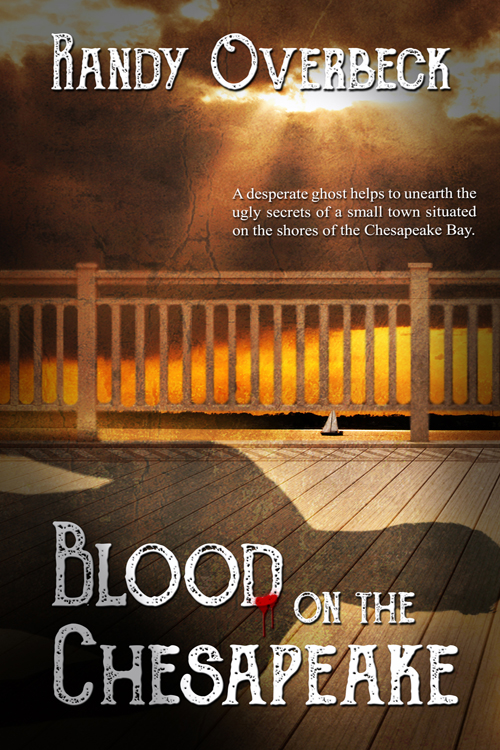
Book Publishing Secrets with Randy Overbeck, Author of 'Blood on the Chesapeake'


Genre: Mystery/Suspense/Ghost Story
Publisher: The Wild Rose Press
INTERVIEW:
Thank you for your time in answering our questions about getting published.  Let’s begin by having you explain to us why you decided to become an author and pen this book?
Randy: I have always been a writer, though not in a creative vein until the last decade or so. In my work life as a teacher and school leader, I was tasked with a great many writing assignments—lesson plans, assessments, newsletters, long range plans, newspaper articles, grant applications, just to name a few. I found I enjoyed these tasks and, based on feedback and performance reviews, was quite good at them. So I decided I’d like to try my hand at writing what I wanted to write, rather than only for work. I began writing fiction, using the people I worked with as inspiration for my characters and what I saw happen in the real world as a jumping off point for my narratives. My novels were born, though not until after a good many fits and starts.
Is this your first book?
Randy: Definitely not. I have two complete novels “in the drawer.” Neither is good enough for publishing, at least yet. I also have one novel published, Leave No Child Behind, a thriller about a terrorist takeover of a high school in the Midwest and the teacher who stands up to the intruders. It was published by another small press, Heroic Teacher Press, and won the 2011 Silver Award for Thriller of the Year from ReadersFavorite.com and I’m quite proud of it. I’m hoping Blood on the Chesapeake does even better.
With this particular book, how did you publish – traditional, small press, Indie, etc. – and why did you choose this method?
Randy: I decided to go again with a small press, The Wild Rose Press. Like most authors, I had hoped to land a strong agent, who in turn could land a contract for the book (or in this case the series) with a major publisher. I did my research and worked the process for about a year. Several agents expressed interest and requested full manuscripts to review, but none ended up making the commitment. I received several emails with “I really like the book, but I’m not in love with it.” So I also did my research on small presses and submitted to a few who I thought might have an interest. Three responded positively and I decided to go with The Wild Rose Press.
Can you tell us a little about your publishing journey?  The pros and cons?
Randy: I’ll be happy to share my experience this far—no copies have been sold yet—and, of course, My earlier experience with the small press on my first novel had been quite positive. In deciding for Blood, I had read a number of good reports on TWRP before I submitted to them and had talked to other authors who had been published by TWRP. They had a good reputation in the field, especially with emerging authors, and, for the most part, my experience has borne that out. They have been easy to work with and have been respectful and positive in our interactions. I’ve been especially impressed with the quickness of their responses in communication. In working with other small presses and agents, it was not unusual to wait weeks and even months for a reply, but TWRP has been quick from the first contact. This attention to my numerous questions and queries has been immediate and polite. I’ve even had conversations with the president and the head of marketing. Of course, I get very little support on the promotion and marketing of my novel, but I pretty much expected that. Successful authors at major firms have shared with me that even they receive very little support in marketing any more. So I went out and found a great marketing consultant and hired her to assist my efforts. So far, it’s been good. Stay tuned and ask me in a year. Of course, it goes without mentioning that you have less control over such things as print, cover art, audio versions, etc, when you sign with a publishing company than if you go alone. It’s been a fair trade off in my mind.
What lessons do you feel you learned about your particular publishing journey and about the publishing industry as a whole?
Randy: I learned how critically important it is that your manuscript is in the best possible shape it is. Of course, I mean free from errors, typos, misspellings, etc. But it should also be the best from point of view of language, characters, dialogue and plot. Second, authors need to go into publishing recognizing that, in today’s crowded literary landscape, they have to work hard to promote and get there book out there, in order to have any chance at any reader success. One thing I’ve learned from the numerous writing conferences I’ve attended is that there are MANY published authors whose work is quite good and who get barely a notice. (Of course, there are also many writers whose work out there is not very good as well.) The point is that you, as an author, need to get comfortable with working even harder after the novel is published, than you had to do to get it published in the first place.
Would you recommend this method of publishing to other authors?
Randy: Overall, yes. I have friends and colleagues who have gone the self-publishing route and have been quite happy and sometimes successful using that venue. But I’ve been very pleased with my two trips through the publishing world via small press. Overall, TWRP has been easy to work with and their reps have listened to my concerns, even though I didn’t always get the answer I wanted. If an author’s works fit their criteria, I’d suggest they explore this avenue to see if it’s right for them.
What’s the best advice you can give to aspiring authors?
Randy: Many writers say that writing is a solitary act, just you and the computer. While I can’t argue with that, I need to add that my writing would never have risen above the minimum without help from outside. I’ve participated in several really good writing conferences—Killer Nashville, Midwest Writers’ Conference, Sluethfest—and have found these experiences invaluable for “priming the pump” and getting me to think beyond my boundaries. Not to mention all the connections I’ve made with fellow writers. But I have found the greatest asset to my writing has been my regular participation in a really great writing group. These fellow writers have been both kind and cruel to my words and my writing has grown as a result.


//////////////
About the book:
Wilshire, Maryland seems like the perfect shore town on the Chesapeake Bay—quiet, scenic, charming—and promises Darrell Henshaw a new start in life and a second chance at love. That is, until he learns the town hides an ugly secret. A thirty-year-old murder in the high school. And a frightening ghost stalking his new office. Burned by an earlier encounter with the spirit world—with the OCD scars to prove it—he does NOT want to get involved. But when the desperate ghost hounds him, Darrell concedes. Assisted by his new love, he follows a trail that leads to the civil rights movement, Dr. Martin Luther King, Jr. and even the Klu Klux Klan. Then, when two locals who try to help are murdered, Darrell is forced to decide if he’s willing to risk his life—and the life of the woman he loves—to expose the killers of a young man he never knew.