Showing posts with label Book Publishing Secrets Interviews. Show all posts

Book Publishing Secrets with Kathye Quick #books #bookpublishing

Born long, long ago in a place not so far away, Shenandoah, Pennsylvania, Kathryn Quick has been writing since the Sisters in St. Casmir’s Grammar School gave her the ruled yellow paper and a number two pencil.  She writes contemporary and career romances, romantic comedies, historical romances as well as urban fantasy. 

Kathye has twenty fiction books in print with various publishing houses and one non-fiction compilation of her town’s history at the behest of the Manville Library Bord.  She was honored to have been named an Amazon top 100 Romance Author for Ineligible Bachelor published by Montlake Romance. Other works include a three book  Grandmother’s Rings Series – Amethyst, Sapphire and Citrine, a rom-com series that follows three siblings as they use their Grandmother’s Rings given to them by their mother to find their soulmates. 

Because she has been fascinated by King Arthur and his knights for almost forever, her series Beyond Camelot, Brother Knights, is her vision of how the majestic kingdom may have survived after Arthur. Two books are written in this series with the third and final still in concept.

She is a founding member of Liberty State Fiction Writers and has been a part of Romance Writers of America and New Jersey Romance Writers.

She is married to her real-life hero, Donald, and has three grown sons, each having romantic adventures of their own. Her two grandkids, Savannah and Dax, happily cut into her writing time but she still manages to get a few pages done each day.

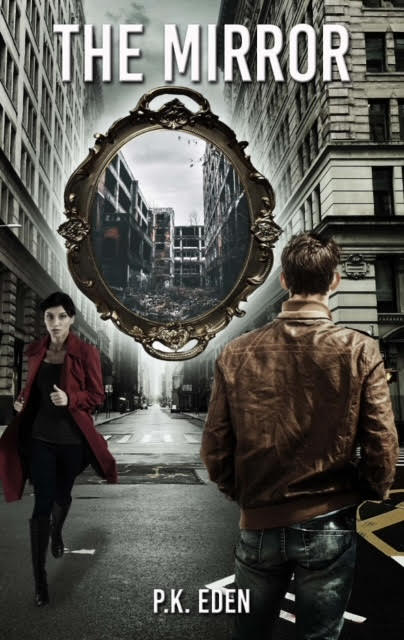
P.K. Eden is the alter ego of multi-published and award winning authors Patt Milhailff and Kathye Quick whose debut novel FIREBRAND was lauded as comparable to the Harry Potter series, garnered 5-Star reviews, and won numerous  Reviewer’s Choice Awards.

Website & Social Media:

Website www.Kathrynquick.com  

Twitter ➜ https://x.com/KQuickAuthor

Facebook ➜ https://www.facebook.com/KathrynQuickBooks/

Instagram ➜ https://www.instagram.com/kathrynquickauthor/

Goodreads https://www.goodreads.com/book/show/217228581-the-mirror

📙 Thank you for your time in answering our questions about getting published.  Let’s begin by having you explain to us why you decided to become an author and pen this book?


P K Eden (Kathye Quick): Patt and I decided to write this series based on the fairy tales of the Brothers Grimm because one day we were fantasizing about all the things we could do if we had the spinning wheel that turned straw into gold, but of, course, it wasn't real. But what if it was?


📙
Is this your first book?

P K Eden (Kathye Quick): No. This is our second brook as P K Eden in collaboration with my writing partner Patt Milhailoff.  Our first collaboration, Firebrand, told of the return of the Garden of Eden and involves every kind of fantasy creature - fairies, trolls, orcs, sprites, and, of course, humans. They all have a part to play.

The Mirror is the first of a three-book series revolving around the artifacts from folk lore and fairy tales from all seven continents under the challenge to protect them from being used for personal gain or world domination.  Imagine if Elon Musk actually got his billions from the spinning wheel that turned straw into gold, or that a prick from a spindle could send your enemies into a 100-year slumber. Interesting ideas, but with good always comes the bad and the greedy.


📙 With this particular book, how did you publish – traditional, small press, Indie, etc. – and why did you choose this method?


P K Eden (Kathye Quick): Bottom line - I need an editor. My mind is so busy listening to all those voices in my head wanting to get a book of their own, that sometimes I skip words or have a sudden spelling issue. I wouldn't be surprised if there was a typo of two in this interview. Hope not.

Our publisher, The Wild Rose Press, is a fabulous pathway to getting our stories out for readers to enjoy.  TWRP is a traditional publisher with a small press feel offering print and e-books. Plus working with the fabulous editors, it feels like home.


📙 Can you tell us a little about your publishing journey? The pros and cons?

P K Eden (Kathye Quick): There are lots of detours on the way to that first book. I don't like to think of them as cons; more like opportunities to get better.

Yes, there is the dreaded rejection letter and/or e-mail (sometimes dozens of them), and if you don't have a thick skin and a drive to get to the end, your writing career could end there. The waiting is brutal. Time between submission and decision can take months.

But then just when you have almost decided to take up knitting instead of writing, that call, or email, or letter comes. You are offered a contract.  The clouds' part and the rainbow forms. You are going to finally have that book.


📙 What lessons do you feel you learned about your particular publishing journey and about the publishing industry as a whole?


P K Eden (Kathye Quick): I've learned to be patient above everything. And patience was something I never had. The line for patience was too long in heaven, so I skipped it. Should have waited.

I've learned to listen to criticism and reviewers, but to remember it is my book. Take what you agree with and learn from it, but don't take everything they say and change your book into theirs. 


📙 Would you recommend this method of publishing to other authors?


P K Eden (Kathye Quick): I would recommend other authors trying all avenues. I won't ever self-publish, but that doesn't mean aspiring authors shouldn't they present the best work they can do.  As I said - I need and editor. 


📙 What's the best advice you can give to aspiring authors?

P K Eden (Kathye Quick): The same advice my father gave me - never give up. He said that quitting was what happens just before you were going to succeed. 

The Mirror is available at Amazon.


Book Publishing Secrets with Randy C. Dockens #books #bookpublishing


Dr. Randy C. Dockens has a fascination with science and with the Bible, holds Ph.D. degrees in both areas, and is a man not only of faith and science, but also of creativity. He believes that faith and science go hand in hand without being enemies of each other.

After completing his bachelor’s degree in pharmacy from Auburn University he went on to graduate school at Auburn and completed his first doctorate degree in Pharmaceutics. He began his scientific career as a pharmacokinetic reviewer for the Food and Drug Administration and later joined a leading pharmaceutical company as a pharmacokineticist, which is a scientist who analyzes how the human body affects drugs after they have been administered (i.e, absorbed, distributed, metabolized, and excreted).

Through the years, he has worked on potential medicines within several disease areas, including cardiovascular, fibrosis, and immunoscience to seek and develop new and novel medicines in these therapy areas.

He has also had his attention on the academic study of the Bible. He earned a second doctorate in Biblical Prophecy from Louisiana Baptist University after receiving a master’s degree in Jewish Studies from the Internet Bible Institute under the tutelage of Dr. Robert Congdon.

Randy has recently retired from his pharmaceutical career and is spending even more time on his writing efforts. He has written several books that span dystopian (The Coded Message Trilogy), end-time prophecy (Stele Prophecy Pentalogy), science fiction (Erabon Prophecy Trilogy), and uniquely told Bible stories (The Adversary Chronicles). All his books, while fun to read, are futuristic, filled with science to give them an authentic feel, have a science fiction feel to them, and allows one to learn some aspect of Biblical truth one may not have thought about before. This is all done in a fast-paced action format that is both entertaining and provides a fun read for his readers.

He has also written some nonfiction books as well. One is to show how all humans are connected from God’s viewpoint by looking at biblical prophecy (Why is a Gentile World Tied to a Jewish Timeline?: The Question Everyone Should Ask). This book shows how all scripture is connected and inclusive of everyone. In addition, he and his editor have written two books about writing. The first is on writing techniques themselves and is entitled Mastering the ABCs of Excellent Writing: Creating Vivid and Colorful Stories that Readers Want to Read. This book not only addresses the techniques of writing, but what makes writing unique to each author. It conveys not only how to better hone one’s craft of writing but also the brand an author wants to portray. This helps an author make their writing unique as well as captivating for his/her audience. The second is a companion book to this one entitled Mastering the ABCs of Excellent Self-Editing: Framing Your Colorful Masterpiece to Keep Readers Engaged in Your Story. This is best used in conjunction with the first one. Yet, self-editing, though intricately connected to writing, is a distinct event. The better the quality of a writer’s draft manuscript when it is delivered to one’s editor, the higher the final quality of the manuscript will be for readers, and that is extremely important.

Dr Dockens is still not done. He has other creative ideas he is bringing forward as he is currently working on two new futuristic series. So, stay turned!

Website https://www.randydockens.com/   
X https://x.com/RandyCDockens 
Facebook  www.facebook.com/Randy.C.Dockens
Instagram https://www.instagram.com/randydockens 
Goodreads https://www.goodreads.com/author/show/16453941

📙 Thank you for your time in answering our questions about getting published.  Let’s begin by having you explain to us why you decided to become an author and pen this book?


Randy C. Dockens: Although your question about how I decided to become an author sounds straightforward, the answer is a rather convoluted one. I think I’ve always had the desire to write a book and be published. Yet, there was never any real follow-through as it seemed like such a daunting task. Plus, I never felt I had the time for such an endeavor as I was so focused on my career: first pharmacy school, then graduate school, and then working with the Food and Drug Administration and then transitioning into the pharmaceutical industry. Yet, several years later, I decided to go back to school for biblical studies. I at first just wanted to learn to better understand the Bible, but then when I was asked if I wanted to audit or take the courses for credit, I decided that if I was going to do the work, I might as well get the credit. Again, no real plans there, just a desire to learn. Yet, one thing led to another, and I found myself with another doctorate. This time in biblical prophecy. I found the subject so fascinating. That’s when I had to decide what I was now going to do with all that new-found knowledge.

Once, for my pharmaceutical job, I had to take a round-the-world tour stopping in India and Japan for several meetings. So, while in flight, the idea of writing a book came back to me and I began to write out what later became a nonfiction book about how the entire world is tied to a Jewish timeline, the topic which stemmed from my dissertation about Gentiles in the Bible. Yet, I never got any real traction from agents on that concept, so I began to think about taking my biblical learning and putting that into fictional stories. I took my understanding of science and of end-time prophecy and wrote a story about a character living in the coming Messiah’s promised kingdom and what his life could possibly look like in that environment. Most people I asked about their understanding of this time in future history as discussed in the Bible stated they really didn’t understand what the Bible taught about such a kingdom, so I thought readers could learn something and be entertained at the same time.


When I talked to a publisher at a writer’s conference about my idea, he stated that while my idea was possibly a good story, that may not be the best idea for a debut novel. So, I had to think about a more general and relatable story. Driving home from work one day, my mind thought about the current world view and how God seemed to be less and less in our culture. I then thought about what would happen if the knowledge of God was completely taken away or banned. What would that look like? That’s when I started on The Coded Message Trilogy. This story is about an astrophysicist who works on a Mars mission and finds certain discrepancies at his work that then lead him down a road discovering how the masses are being controlled by mind manipulation. He then begins to search for the truth certain elites are trying to hide from everyone. It became a dystopian mystery trilogy and the first series that became published: T-H-B, F-S-H-S, and T-U-L-E. The book titles are the clues the characters in the books must solve to understand the truth for which they are seeking. The books allow readers to go on the same discovery mission along with the characters. And, just as an aside, I did get my nonfiction book eventually published: Why is a Gentile World Tied to a Jewish Timeline: The Question Everyone Should Ask. I don’t have time to go into it here, but if one likes an academic view of the Bible but puts it into everyday language, you may enjoy this book.

Despite what my publisher told me, the idea of helping others understand end-time biblical prophecy and being able to demystify it for others never went away from my mind. Therefore, being able to now put on both a scientific hat and a biblical prophecy hat allowed me to present a unique perspective for writing the Stele Prophecy Pentalogy series. This allowed me to present fictional stories which can provide


entertainment for readers but can also provide biblical education at the same time.

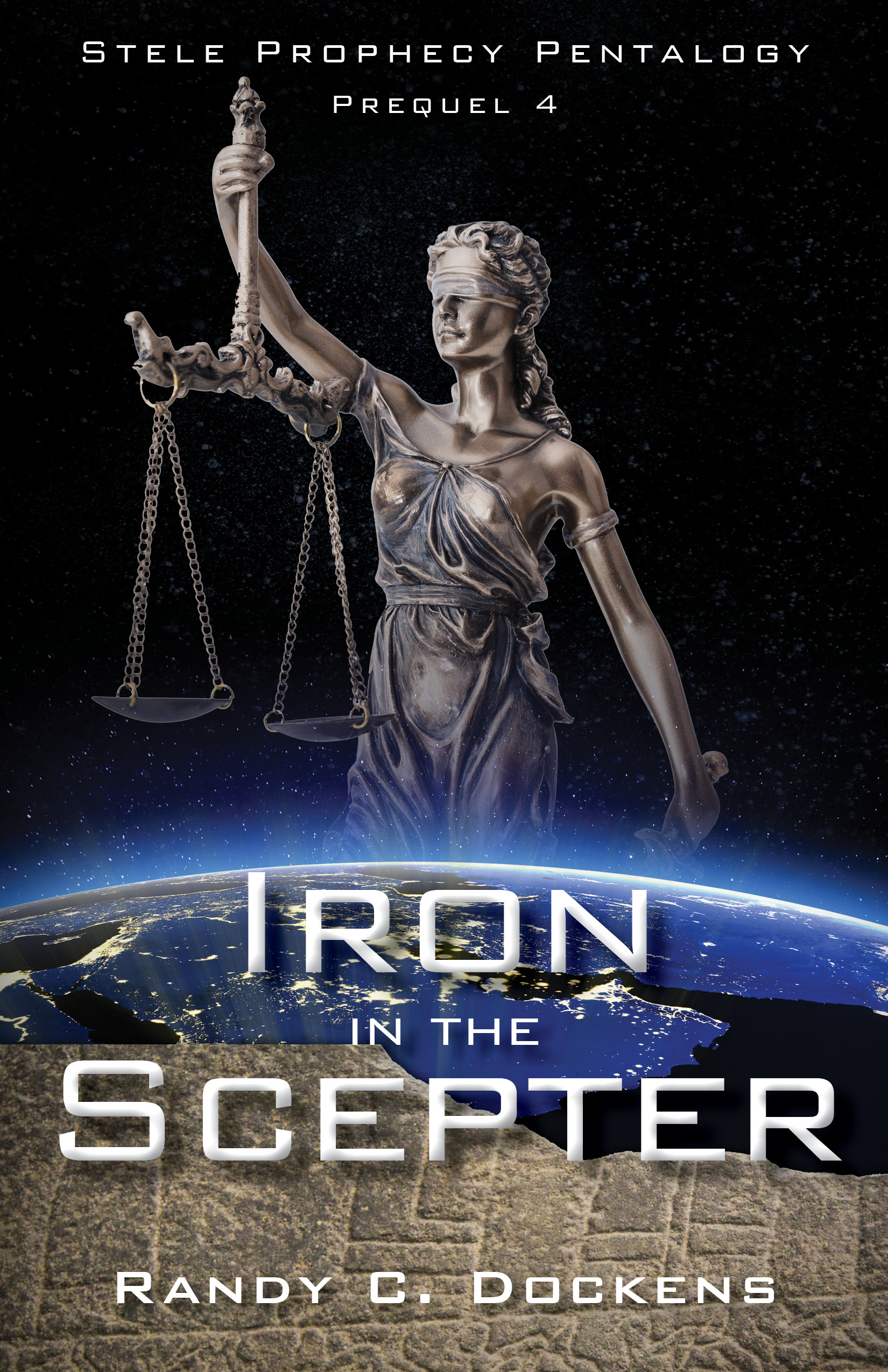
This five-book series is a presentation of five stories during what biblical prophecy says will be a time when a Messiah will come to this Earth and reign. This series also calls this period the Refreshing because things are made new: those who were righteous have been resurrected, all pollution generating machinery and factories are eliminated, and all disease and death have been abolished. This is a one-thousand-year reign of the Messiah where he will reign as King of kings over the earth with his base of operation in Jerusalem, Israel. All my novels in this series are connected to each other but can also be read separately. Because death has been rescinded during this time, except for those who rebel against the King, characters within the story of one book can still be part of the storyline of the next book even if the storyline of each book is separated by several hundred years. The main characters in one book become the supporting characters in the other books.

This explanation doesn’t let you know why I chose this period to be the backdrop for my novels in this series. So, let me now explain one of the main purposes for the genesis of this series. As I stated earlier, there are certain aspects unique to this future time that I want readers to better understand. Let me elaborate.

In my first book, Mercy of the Iron Scepter, I wanted people to experience the wonder of this kingdom with all the peacefulness, beauty, and unity that will exist during this time. In Scripture, it talks about this Messiah, this King, to reign with an iron scepter. That means he will deal harshly with the sin of rebellion. So, I show what that looks like, but also show that there is a merciful side to this harshness as well. While the King deals immediately and decisively with rebellion, he is also loving and wants the best for his citizens of the world. I show that side of him in this novel as well as readers going through the adventures of the main character, Kalem, who is unearthing stelae concerning a potential prophecy regarding the King and one who may overthrow him.

In contrast to this utopian time is its precursor which Scripture calls the Tribulation Period, a time of chaos and all sorts of calamities—an apocalypse of sorts. Promised Kingdom takes the reader through this time and what it might be like to live through such an ordeal as we walk through this time with the main character, Edvin.


Another thing many are confused about is that sacrifices will be made again during this time of a future kingdom. As most Christians believe, Jesus Christ came as the promised Messiah the first time he came to earth fulfilling the Law of Moses and became the sacrifice that the Mosaic Law required for the redemption of mankind. Therefore, today, we no longer have sacrifices. So, what would make them needed in our future? My novel, Hope Renewed, talks about this as one goes through the adventure with Ya’akov and the decisions he makes about his destiny.

Another aspect to this future time is that someone named the Prince is introduced in the book of Ezekiel in Scripture. There are various beliefs as to who this person is. Through my book, Darkness in the Light, as one goes through the struggles with Me’ira, one will see that this Prince is not the Messiah and is not King David as some purport. This novel gives a reason for him being a separate individual from these and what his duties will be for the citizens of the world during this future time.

Then there is the aspect of dealing with human depravity. While this is a time of peace, harmony, and wonderment, there will be those who are still not satisfied with the status quo. I want people to understand that while we have dark spiritual forces today that make us do bad and evil things, even when those forces are held at bay (which will be true during this future time), the heart of mankind can still be evil and against God. People born during this time still need a Savior and their decisions, just like ours today, can have eternal consequences. As readers go through the storyline of Janet in Iron in the Scepter, we cheer her on to make the right decisions even though deep down we know she likely will not. It is similar to when we knew Anakin Skywalker would turn into Darth Vader, yet we kept hoping that he would not make those fateful decisions that we knew he was going to make.

Rather than present all this in a nonfiction format, I thought it would be more interesting to create relatable stories that readers can identify with and have the “learning” be in the background of these fictional stories. While the stories are unique to this time period of our future history in regard to what technology is utilized and how some spiritual beings are now visible, these stories are quite relatable to us today as these characters must still go through many of the same struggles and challenges we face in our day-to-day lives. People are people no matter in what historical timeframe in which they live. Just like Kalem, we struggle with knowing what is really true and don’t realize that truth is what determines our ultimate destiny. And like Edvin, we struggle to find significance in this life and sometimes we must go against what seems like the best solution for our career just because it is the right thing to do. Me’ira, just like us today, struggled with finding true love, and our decisions can have consequences that ripple through time for many generations. Then, just like Janet, we sometimes let pride get the better of us and cause us to make decisions that are unwise and actually hurt the ones we love even though we think we are doing something for their good when it is really not good at all.

I know this was a long answer to your question, but I wanted to explain how this series is a layered presentation to readers. The stories are full of adventure, mystery, and romance in a futuristic setting. If that is all a reader wants out of the story, then it’s there. Yet for those who want to understand more about this future time and what occurs behind the scenes on a daily basis, that is also there. I think readers will be able to identify with the struggles of each character because we struggle with those same concerns and emotions today as well. Reading this series is a way to enjoy a story but learn at the same time without realizing you are actually learning something you may not have known.

📙 Is this your first series?

Randy: Well, yes, and no. Why am I uncommitted in my answer? You see, this was the first series I wrote, but not the first series I published. I talked about this somewhat in my previous answer. I think my


publisher felt that this series, while he liked it, might not be for a wide audience. Yet, I think one can argue that the stories themselves can be appreciated by anyone who likes a good story. At any rate, he suggested the first series to be published should be The Coded Message Trilogy. This is a dystopian mystery about an astrophysicist who is working on a Mars mission who gets caught up in a worldwide conspiracy where the reason for the Mars mission is far more sinister than the public is aware.

So, from a published standpoint, this is my second series. Each book was published four months apart, so it took about a year and a half for it to become a completely published series.

📙With this particular book, how did you publish – traditional, small press, Indie, etc. – and why did you choose this method?

Randy: My publisher is a hybrid of both traditional and indie. It is what is called custom publishing. The publisher provides many of the services of large publishing houses, but the author maintains all rights and control of their work and bears much of the cost as well.

There are a few reasons for choosing this method of publishing. One is that this allows me to maintain control of all aspects of my work. I didn’t want to go completely Indie because there was so much about publishing a book that I did not know. I did not go the traditional route because I first had to go through an agent, and I just could not seem to find an agent who had the same vision as me about this series. They just could not get past the idea that it was about a future kingdom as described in the Bible which they seemed to not be able to comprehend. One agent told me that it was too much “out there.” It needed to be “different” from what is already published but “similar” to what is already published. Confused? I know I was. It seemed he and I just could not get on the same page with my vision for this series. Therefore, I went with custom publishing. The publisher had worked in the traditional publishing market for several years and really knew his stuff, so he was able to guide me through all the hurdles of getting published. I felt good, though, that in the end all was still owned by me and I did not have to give up any rights to any part of my work.

📙Can you tell us a little about your publishing journey?  The pros and cons?

Randy: I think I have answered some of this in my answers to the last few questions. It was a rocky start, I have to say. Maybe all beginning authors start this way, but I was trying to get published while I was learning how to write well. That may have hindered my initial success because I was trying to incorporate all that I read about good writing into my writing. I likely should have waited a little longer to go to agents and publishers until I knew what I was doing. But that was the problem, I thought I did know what I was doing, but really didn’t. Authors, agents, editors, and publishers wrote articles about their “pet peeves” and I took it all to heart. However, my writing became worse instead of better. What I later came to realize was that all their comments were guidelines and not something that could, or should, be implemented across the board. They didn’t communicate that, however. This realization hit me when I read an article about a pet peeve which contradicted another article about someone else’s pet peeve. That’s when the light went on in my brain and I realized that there was no magic formula to writing well; it was the intent of what I was writing that was important. I could “break” the rules, so to speak, but I had to do that with intent and purpose.

As an aside, because of this experience, I and my editor have recently written two books about things new authors need to consider so they do not fall into this same trap I did. I wanted to pay it forward so that others could begin with a more positive experience than I had. These two books are Mastering the ABCs of Excellent Writing: Creating Vivid and Colorful Stories that Readers Want to Read and Mastering the ABCs of Excellent Self-Editing: Framing Your Colorful Masterpiece to Keep Readers Engaged in Your Story. These are not the end-all for writers but is a good start to have in one’s arsenal of becoming a good writer or author.

I think my initial not-so-positive encounters with agents and publishers led me to consider custom publishing earlier than perhaps I would have otherwise. Also, I think my topics and goals were so different from their experience with other authors and goals they didn’t really know what to do with me in the beginning. They couldn’t see my vision, or perhaps I just didn’t have the right elevator speech at that time to give them something that would grab their attention immediately.

By going with custom publishing, I was able to take control of the process myself even though I didn’t have the experience to do so because of the experience and guidance of my publisher.

📙What lessons do you feel you learned about your particular publishing journey and about the publishing industry as a whole?

Randy: First of all, publishing is an extremely competitive business. Agents and publishers are so busy they have very little time for you and can appear extremely rude when perhaps they don’t mean to be. I had one agent tell me that they read the first sentence and make an immediate decision of whether to continue reading or just throw it in the trash. Ouch, I thought. That seems rather harsh. But they have so many inquiries that they can afford to do that. They are not trying to catch your vision but see what will “sell.” Catching your vision on their part comes much later. You will likely have to go through many rejections before success happens.

I found writing conferences to sometimes be quite cold as well. Some people write a book and then join these conferences to teach so they can get name recognition. This isn’t true for all, but I did find that these conferences can also turn into more of a business model than a true place to teach new writers. Don’t get me wrong, if you haven’t been to a writing conference, it is worth going as you will definitely learn something. Just realize they can have the potential to not be as for you as you would wish.

Realize that you are in it for the long haul. If you go the traditional route, you must first get the attention of an agent. Once you have that, it is then getting a publisher to give you the time of day for a pitch. Each step is a long process and a hurdle. You must have confidence in yourself and your product to get beyond all the rejections so you can get to the finish line a winner.

Also, understand that just getting published is not the end. You need to promote your book. Not all traditional publishers are very helpful in this department. They rely on you, the author, to do much of your own publicity and advocacy for your product, your book.

I don’t say all of this to be negative, but just realistic. You will need thick skin, a belief in yourself and your product, your book, to make it to that finish line.

📙Would you recommend this method of publishing to other authors?

Randy: There are pros and cons to each type of publishing. Let’s look at each one briefly.

Traditional: I addressed some of this in the previous question. This is typically a slow and arduous process. There are those quick success stories, but they are not the norm. As I stated, often you must first go through an agent (and they are quite ruthless in their selections), and then that agent pitches your book to a publisher. There is no guarantee of the agent’s success in this regard either. Yet, their success is likely higher than you pitching your idea to a publisher. The advantage is that you will not have to incur any upfront costs. What you get on the backend is up to the contract the publisher makes with you. They will do some form of publicity for you, but they will still depend upon you to get the word out about your book. Another positive is that just being part of a reputable publishing house gives you some credibility that other routes of publication still do not have (yet, that recognition is fast becoming not as advantageous as it once was). There are several downsides you need to consider as well. As we just went over, this could be a long, arduous journey. There is much competition to get an agent’s attention, then your agent has several authors he is working with, so you are not necessarily the highest priority on his agenda. Another downside is that you may have to give up certain aspects of your book to the publisher as they may feel they need to control to better ensure their success. They could change the title, or change the ending, or other things to make it sell from their point of view. At times, this could be fine for you. Other times, it may not be, but this is something you will need to consider.

Small press: My understanding is that this is very similar to traditional publishing. The positive is that you are likely to be a higher priority on their agenda because the number of clients they work with at any one time is small. In addition, you may not necessarily have to go through an agent to get to them. They may have fewer requirements for you to yield over to them before publishing. However, the marketing of your book will likely be expected to be done by you with very little input from the small press publisher.

Indie: There are several advantages here as you have more control over every aspect of your book and its publication. Yet, there is also great responsibility for you at the same time. I can’t tell you how many poorly written books there are that go through this process because you as the author were unaware of the poor quality you were accepting during various aspects of the publishing process. Just because you think it is good does not mean it is. Although you have control of your book, you still need to understand what publishers do and the steps to get a book completed the right way, and the best way. As with everything, there is a good way and a bad way to get things done.

Custom: This is a blend of traditional and indie. Your publisher usually has a lot of experience like a traditional publisher and will be able to guide you through the process. Before choosing one, be sure and ask questions in regard to their experience. This is very important. The downside is that you will be responsible for all monetary aspects of your book, just like an indie author. Yet, the difference is that you will have expert advice given to you to help you be more successful and have a final product with much better quality than you likely would if you were an indie author and had no publishing experience. I would say that even if you wanted to go the indie route, go the custom publishing route first so you know the steps in the publishing process and how to get them completed in the right way.

📙What’s the best advice you can give to aspiring authors?

Randy: As you have probably gleaned from my other responses, there are many things to consider and understand, not only as you write but as you publish. First and foremost, I would say to learn how to write and how to write well before you go to a publisher with any of your work. There are many books out there that can help you. Although biased, I would suggest the two books that I and my editor published just recently which are geared for new authors. Some books are geared for writing but do not really give you the foundation of the why behind what they are telling you to do. The why is just as important, and I believe more important, than the mechanics of writing. Check them out, I think you will find them extremely helpful. We talk about not only writing but self-editing. There are differences between the two, and writers should know how to do both well.

Just because you have written a book does not mean you have learned to write well. Trust me on this. You will likely have much more self-editing to do if your work is your first book. Get your work to the highest writing level you can before you send it to an editor. This is crucial. And don’t think just because you have edited your own work that it is good enough. It is not! Period. Full stop. There are different types of editors, so do your homework and get one that you feel gives you the best advice for the money they are charging. Good editors are worth it, so don’t be too skimpy on this step.

If you don’t go with a traditional publisher, getting a book published can be quite expensive. Every step of the process requires a monetary output from you, the author. Many go the indie route because of this and find they can publish relatively inexpensively. Yet don’t fall for this trap. As the saying goes, you get what you pay for. Don’t sacrifice quality for money. I would strongly suggest that if you are not going the traditional publishing or the small press route, at least go custom publishing for your first book. That way, you can get good advice, know what to do and the correct steps in the process. Then, you can decide how to do those steps and maintain your quality if you take on some of those roles yourself. Be wise. If you put out a bad quality book, that could hurt your sales of any additional books that may be of higher quality. People will judge other books by an author just by reading one book by that author.

Most authors are not made of money, but please don’t sacrifice quality just because you can get published inexpensively. And remember that the marketing of your book will most likely be up to you. So, try and get a platform as soon as you can and gain subscribers to a newsletter or blog that you may put together. If you have any book signings, then be sure you have a sign-up sheet to add them to your newsletter and/or blog posts. The more people you have who you can reach out to when you have a new book, the better. You want as many reviews as you can get relatively soon as your book is published.

I could go on and on, but I think you get the picture. An educated author is a powerful author.


Book Publishing Secrets with Michael Dow #books #bookpublishing

Michael Stephen Dow is married to Perla in Arizona and has 3 kids.  Michael was on a path to attend medical school and then the events of September 11, 2001 occurred.  Michael became angry at the terrorists and decided to join the US Air Force.  He went through Officer Training School and then graduated specialized Navigator training to become an Electronic Warfare Officer.  Michael deployed 6 times for the Global War on Terror between 2005 and 2009 with the EC-130H Compass Call mission.  Michael medically retired in 2010 and then became an US Army contractor serving Wounded Warriors and ensuring they received all of their entitled benefits for 8 years.  Michael always had a love for science and the human body so he then used his GI bill to go through nursing school and graduated in August 2020.  Michael now works as a Registered Nurse at an inpatient psychiatric hospital.  Michael’s education is as follows: B.A. in Psychology from Auburn University in 1999, B.S. in Biology from the University of Alabama at Birmingham in 2001, M.S. in Management from Troy University in 2010, Masters in Health Administration from the University of Phoenix in 2017, and M.S. from the University of Arizona in 2020 through its 15 month accelerated Masters Entry to the Profession of Nursing program.  Michael is the Founder and Manager of Dow Creative Enterprises, LLC.  His books have garnered the Silver Nautilus Book award in 2020 (Nurse Florence, Help I’m Bleeding) and an Award-Winning Finalist in the Religion category for the 2021 International Book Awards (A Prayer to Our Father in the Heavens: Possibly the Greatest Jewish Prayer of All Time).  Michael believes we will need the best of science and religion to successfully navigate ourselves, our civilization, through the future obstacles we will face.  More information can be found at www.DowCreativeEnterprises.com and www.NurseFlorence.org.  Nurse Florence® is a federally registered trademark by Dow Creative Enterprises.  The Nurse Florence® series seeks to promote science and health among children and to help increase the health literacy levels of our society.  With teamwork, inclusion, faith and perseverance, we can bravely face our problems and help each other reach our better selves as well as our best collective good.

Author Links 

 Website | Facebook 

📙 Thank you for your time in answering our questions about getting published.  Let’s begin by having you explain to us why you decided to become an author and pen this book?

My mom said many years ago, after she saw my love of writing, that if I ever became successful, it would probably be due to a kids book.  During the beginning of COVID, I was very concerned about my

children’s online education and thought, “What if I write a science book series and my kids have to read it because dad wrote it.”  The Nurse Florence series was born and the first published in Sep 2020.

📙 Is this your first book?

No.  I have written many books.  Please go to www.DowCreativeEnterprises.com for links to the multiple series.

📙With this particular book, how did you publish – traditional, small press, Indie, etc. – and why did you choose this method?

Indie.  Dow Creative Enterprises® uses the Lulu self-publishing platform to publish the Nurse Florence® series.  We are exploring using other platforms for future series.

📙Can you tell us a little about your publishing journey?  The pros and cons?

Self-publishing can be fun because it can be easy after you figure out how to efficiently operate the platform.  It is very hard to market your books by yourself.  I was told by a traditional publisher they couldn’t publish my books since I was not famous, did not have a massive social media following, or was a recognized expert in my field.  Self-publish helped me still create things and help the world become a little better.

📙What lessons do you feel you learned about your particular publishing journey and about the publishing industry as a whole?

It’s all about marketing if you want to be successful in the realm of high sales.  Be a constant learner and find new ways to promote your book.  There are lots of great book marketing books out there.

📙Would you recommend this method of publishing to other authors?

Yes, but know that it is hard.

📙What’s the best advice you can give to aspiring authors?

Create, create, create.


Book Publishing Secrets with Jens Boele #books #bookpublishing

Jens Boele, a veteran media designer in the entertainment industry, brings over two decades of cinematic expertise to his writing. Born in Germany in 1975, Jens embarked on his writing odyssey in his youth, culminating in the publication of his debut book, “Sunshine,” in 2015. This was followed by “Hurensohn,” and his latest spine-tingling creation, “Urbex Predator.” Jens is a genre-bending author, specializing in horror and crime thrillers. His narratives often blur genre lines, weaving intricate tales that plunge readers into the darkest corners of the human psyche. Jens’s storytelling brilliance lies in his fascination with the criminal mind; his villains are always profoundly human, offering readers a chilling examination of the psychological aspects of the criminally insane. Jens sets himself apart by seamlessly integrating classic horror with the gritty authenticity of the present day. This innovative fusion imbues his narratives with a dynamic quality, seamlessly blending archaic thrills with contemporary intrigue, resulting in an immersive reading experience that resonates with both vintage enthusiasts and present-day readers alike. Jens Boele’s latest endeavor takes his work across borders, as “Urbex Predator” becomes his first book to be translated into English. A globetrotter with deep connections to the United States, Jens’s passion for exploration and his international perspective, nurtured by family and friends in the US, shine through in his writing, offering readers a captivating blend of horror and cultural diversity. 

Visit Jens’ website at https://jensboele.com/.

📙 Thank you for your time in answering our questions about getting published.  Let’s begin by having you explain to us why you decided to become an author and pen this book?


Jens: Thank you for having me—it's a pleasure! My journey into writing began at a young age, likely during my childhood when friends and I immersed ourselves in pen and paper roleplaying games like D&D. I was captivated by the allure of fictional worlds, filled with fantastical creatures and heroic tales. Inspired by renowned authors such as Tolkien and Stephen King, who masterfully crafted their own literary universes, I embarked on my own storytelling endeavors.

One of my earliest attempts at writing was a draft centered around a group of Viking misfits embarking on adventures in the Caribbean—complete with the unconventional addition of Orcs as allies, forming a unique Viking-Orc-Pirate Crew. Although the concept may seem comical in retrospect, it served as my initial foray into crafting narratives.

As time passed, I gravitated towards the horror and crime genres, ultimately penning my first novels, "Sunshine" and "Son of a Bitch," which delve into the gritty underworld of criminal activity. These early works paved the way for my latest endeavor, "Urbex Predator," a chilling exploration into the world of urban exploration. This book allowed me to merge my love for exploring forgotten places with my lifelong dedication to storytelling, creating a unique and immersive experience for readers.

📙 Is this your first book?

Jens: No, "Urbex Predator" is actually my third fictional book and my sixth overall. My writing journey started with crime novels such as "Sunshine" and "Son of a Bitch," which explore the gritty underworld of criminal activity. Each book has been a learning experience, helping me hone my craft and expand my storytelling abilities. "Urbex Predator" is the culmination of my passion for urban exploration and my love for writing horror, blending real-life experiences with elements of suspense and terror. It's been a thrilling journey, and I'm excited to see where my writing will take me next.

📙With this particular book, how did you publish – traditional, small press, Indie, etc. – and why did you choose this method?

Jens: With "Urbex Predator," I chose to self-publish. This decision came after my initial experiences with traditional publishing avenues, where I found the process challenging and often disheartening. Traditional publishers frequently favor established authors with a proven track record and large followings, which can make it tough for new writers to break in.

I initially tried to go the traditional route with my first two novels, preparing neat packages, chasing contacts at conventions, and even working with book agencies. However, the results were less than satisfying. Many companies didn't respond to my submissions, and the feedback from agencies didn't lead to any tangible progress.

Self-publishing offered me the freedom to bring my book directly to readers without the gatekeepers of traditional publishing. While it requires wearing many hats—author, marketer, promoter, and social media manager—it also allows for greater control over the creative and marketing processes. Given my background in design and my passion for storytelling, self-publishing was a natural fit. This method empowers me to share my work on my terms and connect directly with my audience.

📙Can you tell us a little about your publishing journey?  The pros and cons?

Jens: Absolutely. The journey of self-publishing "Urbex Predator" has been both rewarding and challenging, with each step offering its own set of advantages and drawbacks.

One of the most significant advantages of self-publishing is the complete creative control it affords. I had the freedom to design my cover, choose the layout, and make every decision about the book's content without having to compromise with a publisher. Additionally, self-publishing allows for a much quicker turnaround time. Traditional publishing can take months or even years from manuscript submission to publication, but with self-publishing, I was able to bring "Urbex Predator" to market in a fraction of that time.

Another benefit is the higher percentage of royalties I receive compared to what traditional publishers typically offer, which means more of the profits go directly to me. Moreover, self-publishing has allowed me to build a direct relationship with my readers. I can receive feedback more quickly and adjust my marketing strategies accordingly, creating a more interactive and engaging experience.

However, self-publishing comes with its own set of challenges. One of the biggest drawbacks is the need to invest money upfront. Costs can include editing, cover design, formatting, and marketing, and these expenses can add up quickly. Without the backing of a traditional publisher, all the marketing and promotional efforts fall on my shoulders. This can be both time-consuming and challenging, as it requires skills beyond writing, such as social media management and advertising.

Distribution can also be a challenge. While platforms like Amazon Kindle Direct Publishing (KDP) make it easy to distribute ebooks, getting physical copies into brick-and-mortar bookstores is more challenging for self-published authors. Additionally, there is still a stigma associated with self-publishing, and it can be harder to gain recognition and credibility in the literary world compared to traditionally published authors.

Despite these challenges, the self-publishing route has been incredibly fulfilling. It allows me to stay true to my vision and connect directly with readers, and every success feels even more rewarding knowing the amount of personal effort that went into it. The journey has taught me a lot about resilience, creativity, and the business side of being an author, and I wouldn't trade those lessons for anything.

📙What lessons do you feel you learned about your particular publishing journey and about the publishing industry as a whole?

Jens: My self-publishing journey with "Urbex Predator" has been a profound learning experience, offering valuable insights about both the self-publishing process and the broader publishing industry.

One of the key lessons I've learned is the importance of persistence and resilience. The path to self-publishing is fraught with challenges, from the initial stages of writing and editing to the complexities of marketing and distribution. It's essential to stay committed and adaptable, continuously learning and refining strategies to overcome obstacles. This journey has reinforced the idea that success in self-publishing doesn't come overnight; it requires consistent effort and dedication.

Another crucial lesson is the significance of building a personal brand and engaging with readers. In the absence of a traditional publisher's marketing machinery, connecting directly with the audience becomes paramount. Social media platforms, author websites, and reader communities are invaluable tools for creating a loyal readership. Engaging with readers not only helps in promoting the book but also provides valuable feedback that can guide future writing projects.

I've also come to understand the multifaceted role an author must play in the self-publishing world. Beyond writing, an author must wear many hats—those of a marketer, promoter, designer, and even a business strategist. Each of these roles demands its own set of skills, and mastering them is essential for a successful self-publishing venture. For instance, learning about SEO, social media marketing, and the nuances of ebook formatting has been an eye-opener.

Regarding the publishing industry as a whole, one of the most striking lessons is the democratization of publishing that self-publishing platforms have enabled. Traditional publishing can be highly gatekept, often favoring established authors or those with substantial followings. Self-publishing levels the playing field, allowing anyone with a compelling story to share it with the world. This democratization, however, also means the market is saturated, making it imperative to produce high-quality work and effective marketing strategies to stand out.

Another lesson is the value of professional collaborations. While self-publishing offers autonomy, it's also important to recognize when to seek professional help. Whether it's hiring a professional editor, a cover designer, or a marketing expert, investing in these areas can significantly enhance the quality and success of a book. My collaboration with an ebook formatter, for example, ensured that "Urbex Predator" provided a seamless reading experience.

In summary, my self-publishing journey has taught me the importance of persistence, the necessity of building a personal brand, the multifaceted nature of the author's role, and the democratizing power of self-publishing platforms. It has also highlighted the value of professional collaborations in producing a high-quality book. These lessons have not only shaped my approach to publishing but have also provided a deeper understanding of the industry's evolving landscape.

📙Would you recommend this method of publishing to other authors?

Jens: Absolutely, I would recommend the self-publishing route to other authors, but with a few caveats. Self-publishing offers a unique set of advantages that can be incredibly rewarding for authors who are willing to put in the work. It provides complete creative control over the content, cover design, and marketing strategy. This freedom allows authors to bring their vision to life without the constraints often imposed by traditional publishing houses.

However, self-publishing also demands a significant investment of time, effort, and sometimes money. Authors need to be prepared to take on multiple roles beyond writing, including marketing, promotion, and sometimes even design. It's crucial to have a clear plan and be ready to learn new skills or hire professionals to handle certain aspects, such as editing and cover design.

One of the biggest benefits of self-publishing is the ability to directly connect with readers and build a personal brand. Engaging with your audience through social media, author websites, and reader communities can create a loyal fan base and provide invaluable feedback. Additionally, self-publishing platforms like Amazon KDP make it relatively easy to distribute your book globally, giving you access to a wide audience.

On the downside, the market is highly saturated, and standing out requires effective marketing and high-quality content. It's also worth noting that self-publishing can be a lonely journey without the support and validation that often come with a traditional publishing deal.

In summary, I would recommend self-publishing to authors who are ready to take on the challenges and embrace the opportunities it offers. It can be a highly rewarding path, especially for those who are proactive, resilient, and eager to connect directly with their readers.

📙What’s the best advice you can give to aspiring authors?

Jens: Writing and publishing is a journey. Don't expect to become famous overnight; it's a long and rocky road that leads to success. Enjoy every step and find happiness in the process. Celebrate the small victories, learn from the setbacks, and keep pushing forward. Remember, the joy of writing and sharing your story with the world is an achievement in itself. Stay passionate, stay persistent, and most importantly, stay true to your creative vision.


Book Publishing Secrets with Lisa King #books #bookpublishing

Lisa King is a Canadian fiction author and researcher whose work on veteran mental health has been published in numerous academic journals. She holds degrees in psychology and neuroscience, both from Western University. Aside from writing, she enjoys family outings, ample coffee, and unapologetic napping. She lives in London, Ontario with her husband, daughter, and wonky-eyed cat.

Her latest book is the adult science fiction/psychological thriller, Blue Haven.

You can vist her website at www.AuthorLisaKing.com or connect with her on Twitter and Instagram.


Welcome to Blue Haven, the world’s most lucrative condo corporation—so exclusive that only five lucky residents live in this lush, tropical paradise, housed in a top-secret location.

Among them is twenty-five-year-old Aloe Malone, an introvert and former waitress who traded bussing tables for lengthy sleep-ins, ocean dips, Michelin-star restaurants, spectacular sunsets, and unlikely new friends—all thanks to a spurious lottery win.

Life’s good.

Damn good.

That is, until Aloe discovers a journal.

Seemingly left by a past resident named Eloise whose entries are both sad and evoking, Aloe quickly suspects there’s more to Blue Haven than meets the eye.

Her suspicions are confirmed when visions arise, gruesome hallucinations she can’t understand, followed by a strange yet familiar man lurking in places he shouldn’t. Something’s wrong. Or maybe it’s all in her head. Regardless, she vows to uncover the truth.

Except someone wants to keep her quiet, and it’s the last person she ever suspected.

Blue Haven is a science-fiction thriller that explores what innovation can achieve—and destroy—despite the best intentions. King’s imaginative world building and use of moral ambiguity make this page-turning novel a thought-provoking thrill that’s impossible to put down.

Book Information

Release Date: May 31, 2022

Publisher:  The Story Plant

Soft Cover: ISBN: 978-1611883206; 336 pages; $26.95; E-Book, $7.49

Book Trailer https://youtu.be/DgnqxcZLRcg

Amazon: https://amzn.to/3LVsZB0

Barnes & Noble: https://bit.ly/3waPpHv  

Indigo: https://bit.ly/3MWRayO

IndieBound: https://www.indiebound.org/book/9781611883206

Book Depository: https://bit.ly/3kNK4kk

📙 Thank you for your time in answering our questions about getting published.  Let’s begin by having you explain to us why you decided to become an author and pen this book?

Lisa: Thanks for having me! I don’t think becoming an author was ever something I thoughtfully considered; more so, I’ve always loved to write, and penning a novel seemed like an enjoyable challenge. I gave it a whirl (and have kept whirling, years later).  

Interestingly, Blue Haven was the first book I ever attempted, some thirteen-years back—which went terribly, and so began a decade-long hiatus that only recently ended when I decided to finally finish what I started, for good. 

📙 Is this your first book?

Lisa: Blue Haven is my second published novel. My first book, Vanishing Hour, came out in 2020, just in time for a worldwide pandemic. 


📙With this particular book, how did you publish – traditional, small press, Indie, etc. – and why did you choose this method?

Lisa: My publishing house, The Story Plant, is a small-press shop. It was my literary agent (Travis Pennington at The Knight Agency) who guided me here initially. I like the intimacy of small-press, the increased autonomy, and the philosophy of The Story Plant specifically: their dedication to authors and interest in developing new voices. Founding editor, Lou Aronica, is also an author himself, so I feel like he really gets it.  

📙Can you tell us a little about your publishing journey?  The pros and cons?

Lisa: My journey to publication definitely wasn’t overnight. I wrote a few unfinished manuscripts in my early twenties (Blue Haven being one), then completed a full manuscript by the time I was twenty-five, which remained unagented after a handful of queries (before I realized querying was usually more than just, you know, a few attempts). I started writing Vanishing Hour in my late twenties, finished it by thirty, and got extremely lucky with Travis during my first round of querying. Still, we worked on pitching and editing Vanishing Hour for years before it found a home at The Story Plant. 

The biggest con, in my opinion, is time. Everything takes time, and that’s something I didn’t realize as an aspiring author. If you want to pursue traditional publishing, there’s the monumental task of actually writing the book, then comes finding an agent, subbing with editors, selling the book, and many rounds of editing before it’s published. Each of these steps can be extraordinarily time consuming. That said, I’ve learned so much over the past decade about writing and myself, and I’m not sure if any of that can be properly rushed. 

Biggest pro? I’m doing something that I love. 

📙What lessons do you feel you learned about your particular publishing journey and about the publishing industry as a whole?

Lisa: For me personally, patience and perseverance. Determination will get you where you want to go, it just might take a little (or a lot) longer than you think. To quote Dory from Nemo, “Just keep swimming, just keep swimming.”  

What I’ve learned about the publishing industry as a whole, is that it’s hard. I mean, you’re walking into a ruthless and rejection-forward space … voluntarily. But there are more opportunities now for aspiring authors than ever before—especially with the number of indie options and small-press houses that accept manuscripts without representation.

📙Would you recommend this method of publishing to other authors?

Lisa: Yes, definitely!


📙What’s the best advice you can give to aspiring authors?

Lisa: Don’t give up! And you will want to, at some point (see “ruthless and rejection-forward space,” above). There’s a reason you started writing: you enjoy it, and you have something to say. Focus on the why behind the words—get swept into a story, learn something, and most importantly, enjoy the process. Because if you’re not enjoying it, what’s the point?